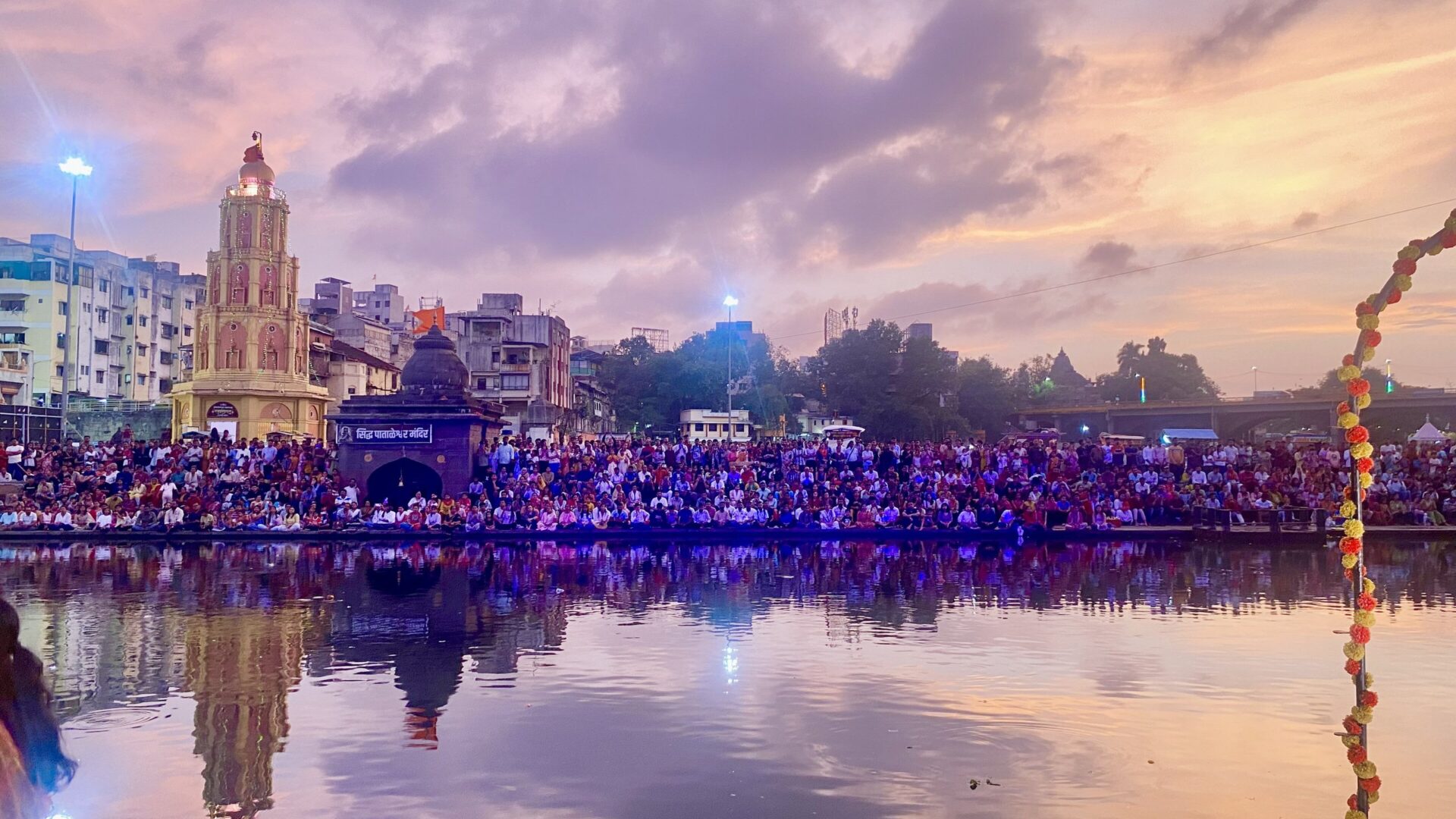
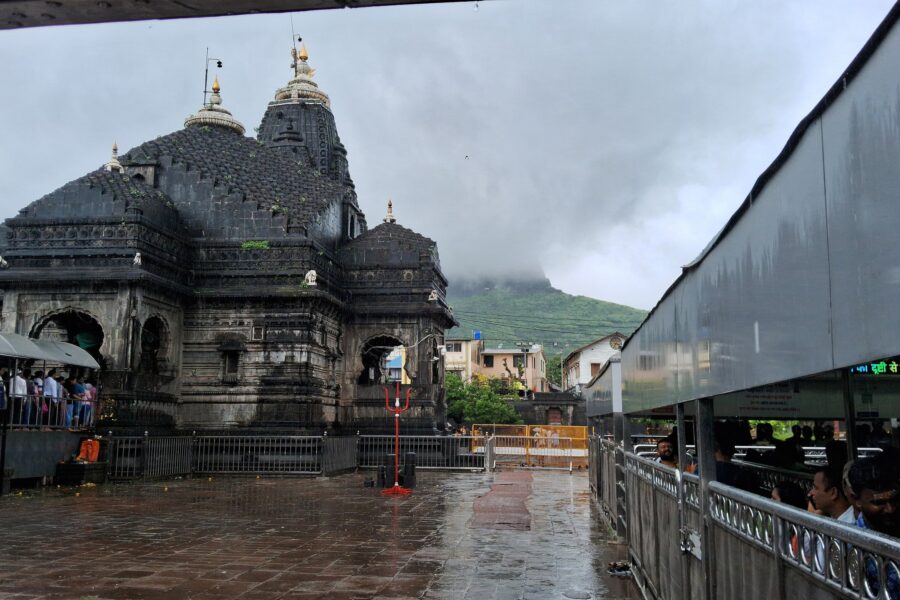
A city on the Godavari in north Maharashtra, about 170 km north-east of Mumbai, with two very different sides. Its old core, Panchavati, is tied to the Ramayana: Ram, Sita and Lakshman are said to have lived here in exile, and the riverbank is lined with ghats and temples around Ramkund, the black-stone Kalaram temple and Sita Gufa. About 30 km west, Trimbakeshwar is one of the twelve Jyotirlingas of Shiva, below Brahmagiri hill where the Godavari rises. Nashik and Trimbakeshwar share the Simhastha Kumbh Mela every twelve years; the current one runs from late 2026, with the main bathing days announced for August and September 2027. The other Nashik is often called India's wine capital, with Sula and other vineyards on the edge of the city, and the Buddhist rock-cut caves of Pandavleni, about 2,000 years old, look down on it from the south.
DIY Snapshot
DIY difficultyEasy
Best forSpiritual, Culture, Food
Ideal days2-3 days
Best seasonJul to Mar: the monsoon turns Trimbak and Anjaneri green, and winter is mild and the grape season; the summer is hot
Budget₹4,000-₹9,000
Local transportEasy
InternetGood
Safety comfortHigh
LanguagesMarathi, Hindi, some English
How is this score calculated?
This is a DIY-readiness gauge - how do-able it is to plan and travel yourself. Destinations show it as a 0-5 DIY Score; treks & routes as a 0-10 Score (a wider scale for the extra variables they carry). Both are built from these factors:
SafetyLocal safety, terrain and current advisory conditions along the route.
Transport accessHow easily you can reach the place and move around without your own vehicle.
NetworkMobile signal and data coverage you can expect on the way.
Season reliabilityHow dependable the weather and season window is for travel.
Budget clarityHow predictable day-to-day costs are, with few surprises.
Trail / route clarityHow well-marked and easy to follow the route or trail is.
Stay availabilityThe choice and reliability of places to stay along the way.
First-timer friendlinessHow forgiving it is for a first-time independent traveller.
Solo / women comfortHow comfortable and safe it is for solo and women travellers.
Local supportAvailability of guides, hosts and on-the-ground help if you need it.
The sweet spot for visiting Nashik is July to March: the monsoon turns Trimbak and Anjaneri green, and winter is mild and the grape season; the summer is hot. Give it 2-3 days to do it justice. Budget roughly ₹4,000-₹9,000 per person for a DIY trip. It is a good fit if you are after spiritual travel, culture and heritage and local food. First-time DIY travellers can manage it comfortably, and it is a sensible pick for solo women travellers.
DIY route options
Panchavati and TrimbakeshwarTwo days: the ghats, Kalaram temple and Sita Gufa on day one, an early Trimbakeshwar darshan and Kushavarta Kund on day two.
Temples, caves and vineyardsThree days: Panchavati, then Trimbakeshwar with the Anjaneri hike, then Pandavleni caves in the morning and a vineyard tasting in the afternoon.
Monsoon weekend from MumbaiTrain to Nashik Road, Trimbakeshwar and Anjaneri at their greenest, then back via Igatpuri, or on to Bhandardara for the waterfalls.
What most travellers miss
The Pandavleni caves sit just off the Mumbai-Agra highway and are skipped by most pilgrims, though they are among the older rock-cut sites in Maharashtra.
Kushavarta Kund in Trimbak town, regarded as the symbolic source of the Godavari, is a few minutes' walk from the temple.
The Kapaleshwar Mahadev temple near Ramkund is known for having no Nandi before it.
Anjaneri, regarded as the birthplace of Hanuman, has a hike to a wide plateau about 9 km before Trimbak.
Where to base yourself
PanchavatiNight 1
NashikNight 2
DIY is the main way - this is the upgrade
Want expert help adapting this plan?
Want a version of this plan built around you? We rework the route, pacing, stays and budget for your dates and group size - you travel independently, with the research already done.
Nearest airportNashik airport at Ozar is about 20 km from Panchavati, with a small number of domestic flights. Mumbai airport, about 170 km away, has far more choice.
Nearest railway stationNashik Road station, about 12 km from Ramkund, is on the main Mumbai-Bhusawal line, with frequent trains from Mumbai (around 3.5-4.5 hours) and long-distance trains from Delhi and other cities.
Bus & road hubMSRTC buses run frequently to Nashik from Mumbai, Pune, Shirdi and Chhatrapati Sambhajinagar; buses also run from the city to Trimbakeshwar through the day.
Taxis & local transportAutos and app cabs work in the city. For Trimbakeshwar (about 31 km), Anjaneri and the vineyards, a cab for the day is the easiest option.
Road access & best routeAbout 168 km from Mumbai via the Mumbai-Agra highway and the Kasara ghat (3.5-5 hours), 215 km from Pune, 91 km from Shirdi and 178 km from Chhatrapati Sambhajinagar. Trimbakeshwar is 31 km, Igatpuri about 47 km and Bhandardara about 70 km.
Things to do & travel tips
Trimbakeshwar queues are longest on Mondays, through Shravan and on festivals; the temple trust's paid donation darshan shortens the wait but does not skip it. Men going into the inner sanctum for special pujas must follow the temple dress code; general darshan has no strict one.
During the Simhastha Kumbh, especially on the main bathing days in August and September 2027, expect closed roads, very large crowds and much higher hotel prices; check the official schedule before you plan.
Sula and the other wineries run tastings and tours; book weekend slots ahead, carry ID for age checks, and do not drive after a tasting.
The ghat steps at Ramkund are slippery, and the Godavari rises fast in heavy rain; keep back from the edge in the monsoon.
Tap “Get directions” to open any spot straight in Google Maps.
Kalaram Temple
0.3 km from Nashik centre
Kalaram Temple, is a Hindu temple in Nashik of Nashik district in Maharashtra, dedicated to the deity Rama. It is a temple situated in Panchavati area of the Nashik. The temple derives its name from a black statue of …
Chatrapati Shivaji Maharaj Uddanpul is in Nashik city, Dwarka area. It starts from Pandavleni caves and ends near Adgaon. It is India's first externally-strutted segmental box girder bridge. it has capacity of 100 Ton…
The Kapila is a river in Maharashtra. It is a minor tributary of the Godavari River, India's second longest river after the Ganga. The river is named after Rishi Kapila.
Gajpanth is a Digambar Jain pilgrimage site (Siddha-kshetra) located in Mhasrul village, in the Nashik district of the Indian state of Maharashtra.
It is managed and maintained by Registered Trust No. A-193/NSK.
The Trirashmi Caves, or Nashik Caves or Pandavleni is a holy Buddhist and Jain site located about 8 km south of the centre of Nashik, Maharashtra, India. Most of the caves are viharas except for Cave 18 which is a cha…
The best time to visit Nashik is July to March: the monsoon turns Trimbak and Anjaneri green, and winter is mild and the grape season; the summer is hot.
How many days do you need for Nashik?
Plan for about 2-3 days to see Nashik at an easy pace.
What is the nearest railway station to Nashik?
The nearest railway station to Nashik is Nashik Road station, about 12 km from Ramkund, is on the main Mumbai-Bhusawal line, with frequent trains from Mumbai (around 3.5-4.5 hours) and long-distance trains from Delhi and other cities.
What is the nearest airport to Nashik?
The nearest airport to Nashik is Nashik airport at Ozar is about 20 km from Panchavati, with a small number of domestic flights. Mumbai airport, about 170 km away, has far more choice.
How do you reach Nashik by road?
About 168 km from Mumbai via the Mumbai-Agra highway and the Kasara ghat (3.5-5 hours), 215 km from Pune, 91 km from Shirdi and 178 km from Chhatrapati Sambhajinagar. Trimbakeshwar is 31 km, Igatpuri about 47 km and Bhandardara about 70 km.
How much does a trip to Nashik cost?
A DIY trip to Nashik starts around ₹4,000-₹9,000 per person, depending on stays, travel and season.
Is Nashik good for first-time or solo travellers?
Yes - Nashik is a sensible pick for first-time DIY travellers and solo women travellers, if you plan the basics ahead.
Jul to Mar: the caves and the Ajanta gorge are at their greenest in and just after the monsoon, and winter is pleasant; the summer is very hot Maharashtra