
Langza and its Buddha Statue – Your Ultimate Travel Guide
 Aditya Bansal
·14 min read
·Last reviewed
Aditya Bansal
·14 min read
·Last reviewed
Meta description: ” Journey to Langza, the ‘Fossil Village’ of Spiti Valley. Explore rich fossil reserves, Tibetan architecture, and the towering Lord Buddha statue at 14,500 feet.”
Langza Village: Spiti Valley’s Hidden Treasure
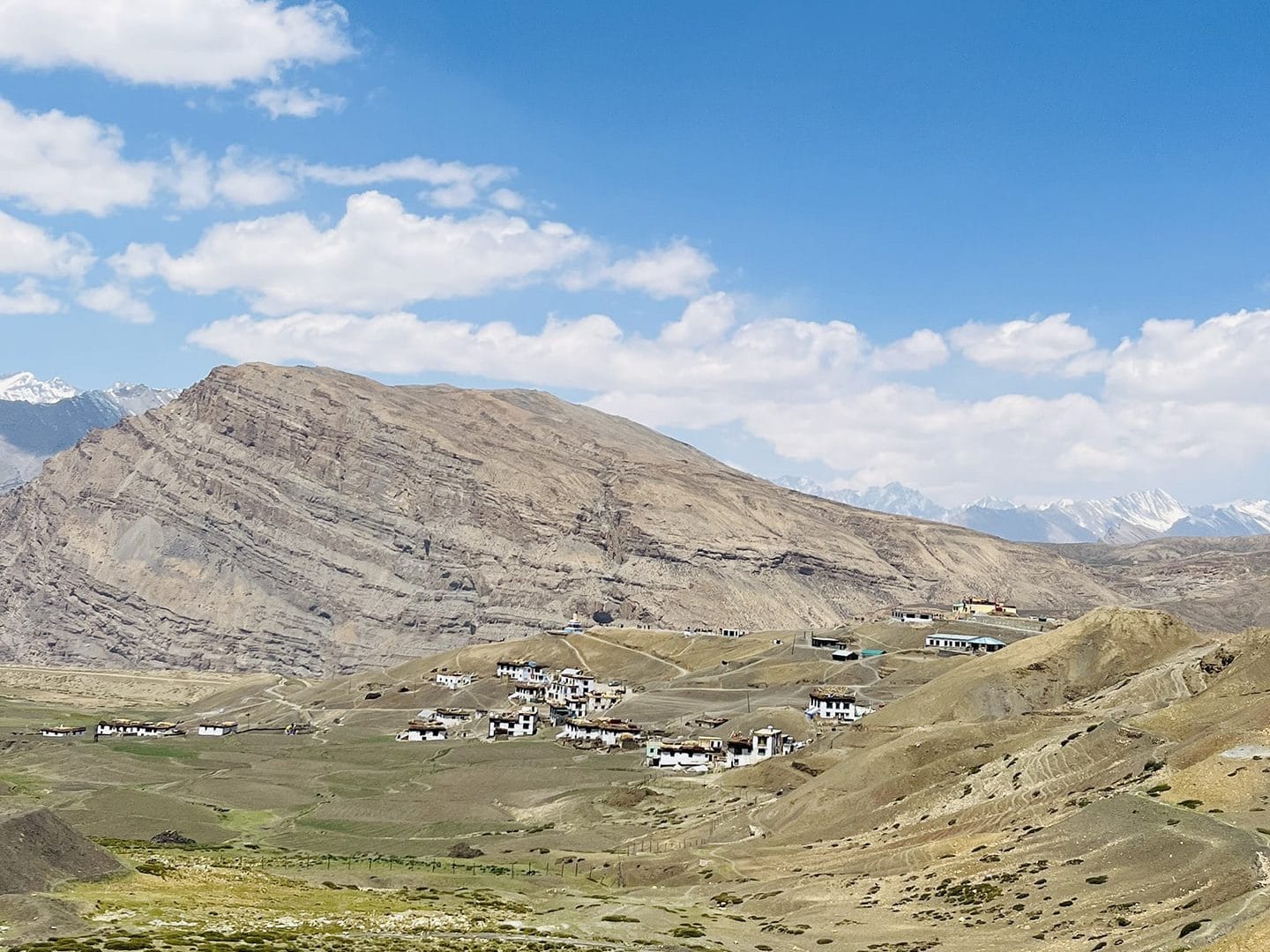
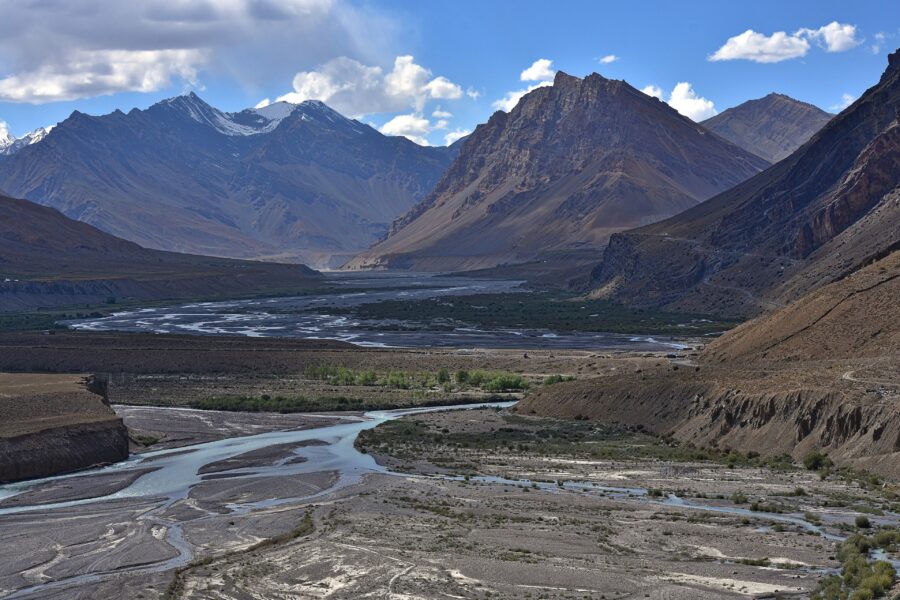
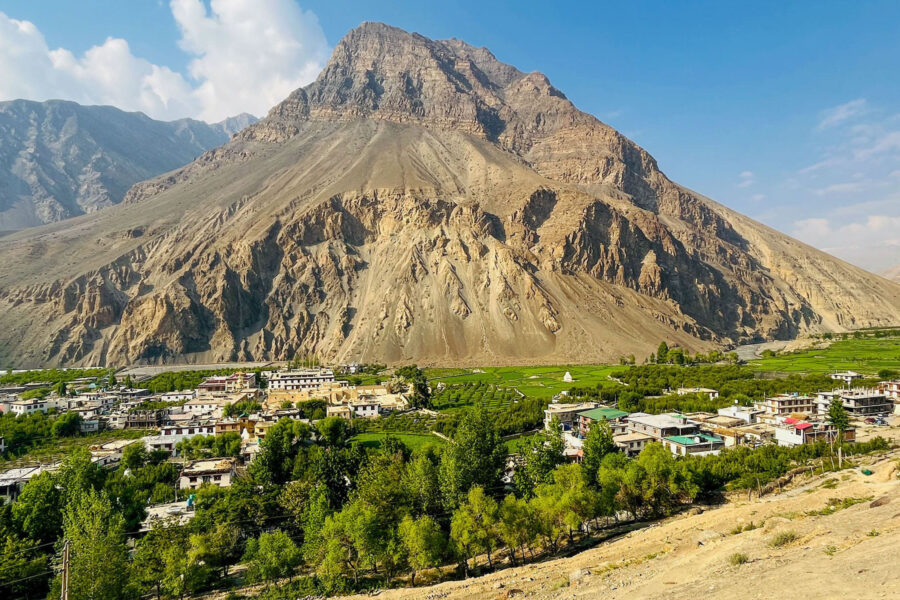
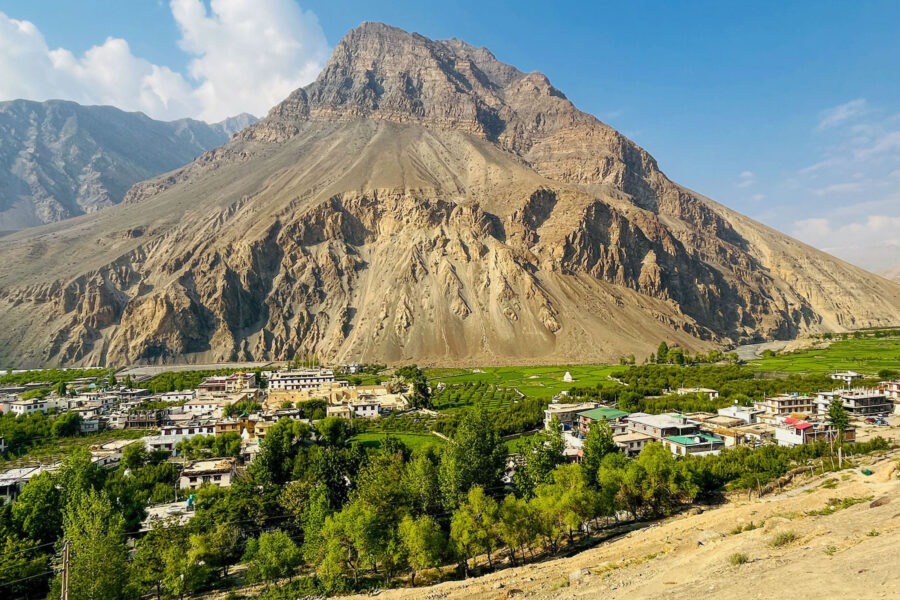
Langza Village, popularly known as the “Fossil Village,” is a beautiful and hidden community in Himachal Pradesh’s Spiti Valley. This tiny town is positioned at an incredible 14,500 feet above sea level, making it one of the highest villages in the area. Langza, with its rich fossil, finds and gorgeous scenery, is the place to be if you’re searching for a calm vacation surrounded by stunning natural beauty.
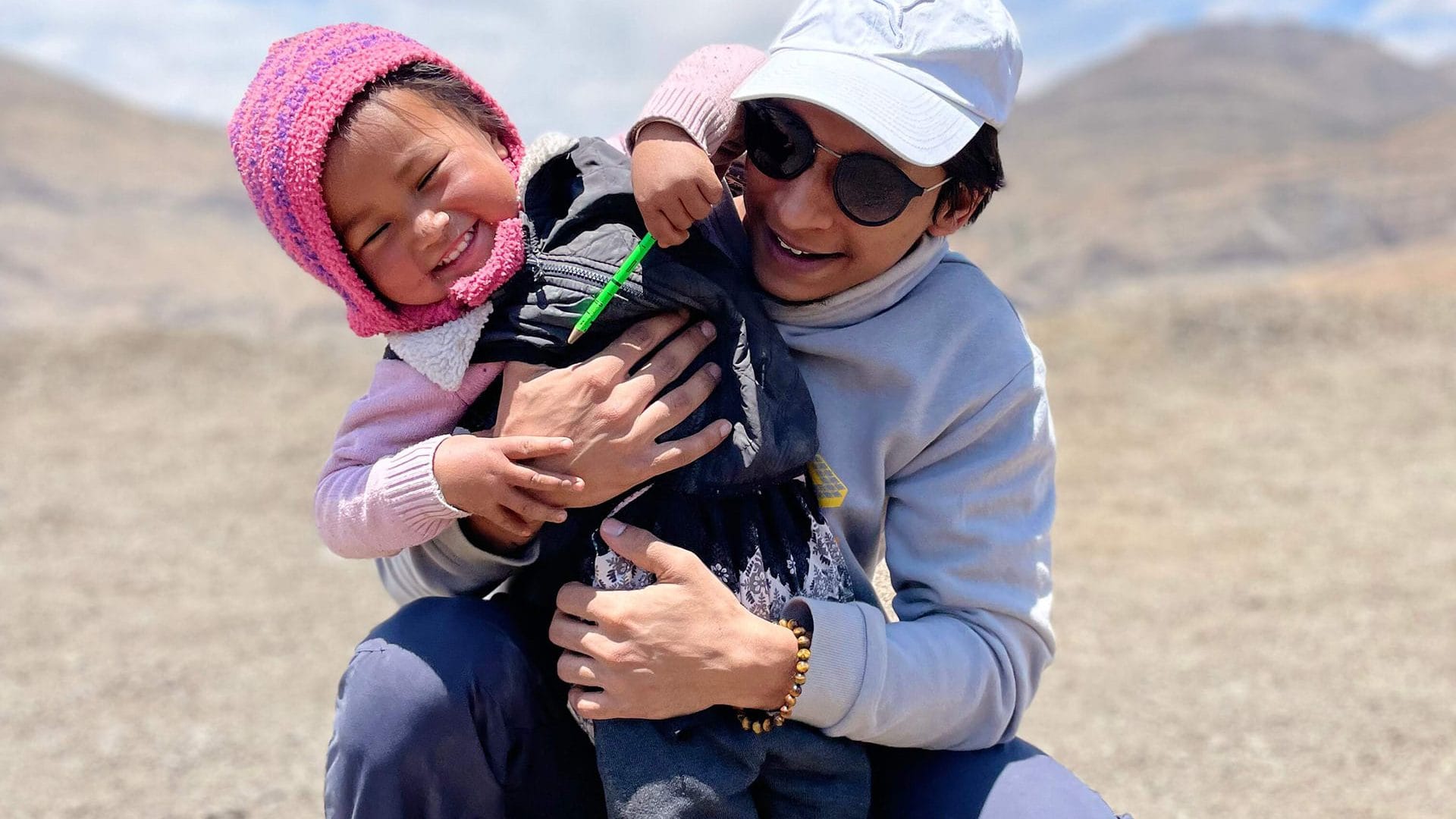
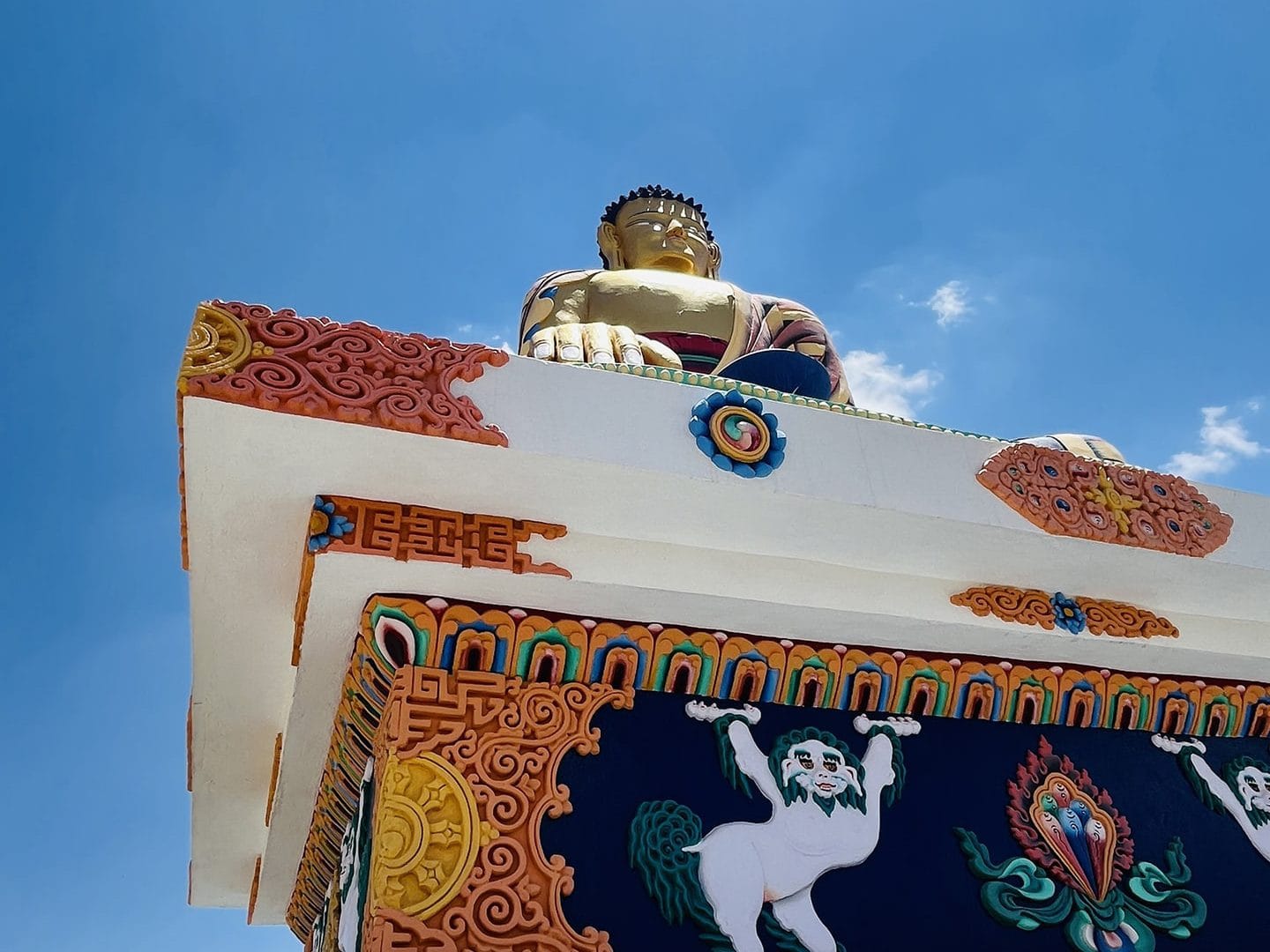
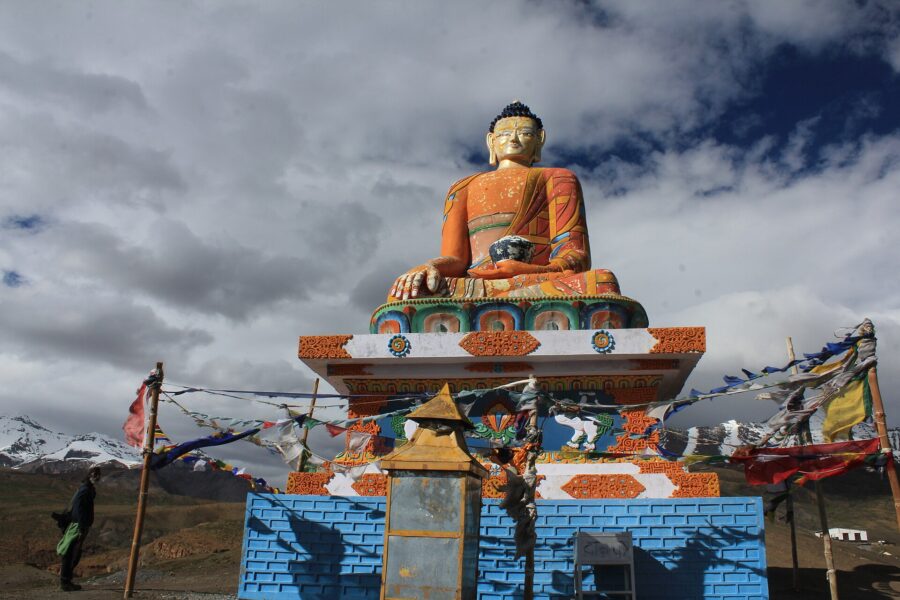
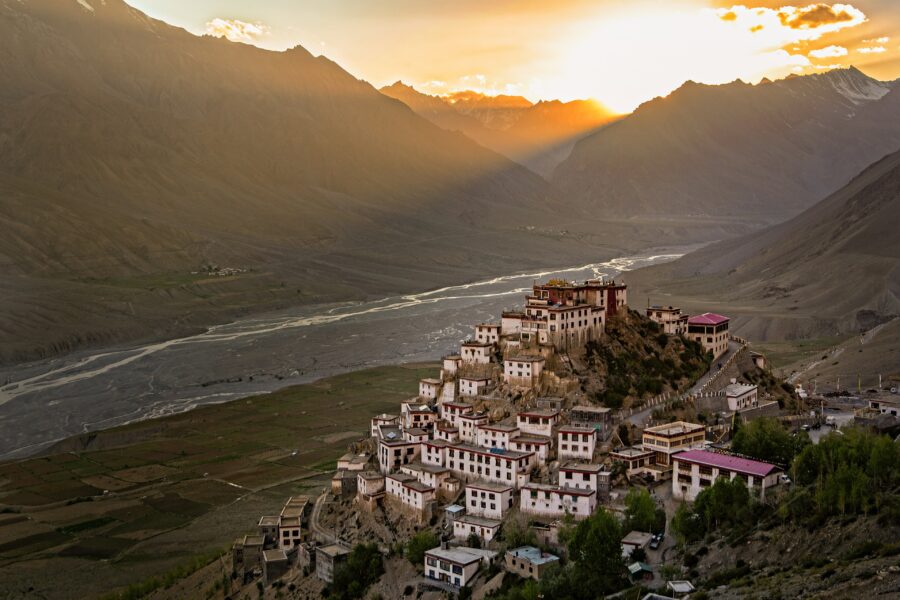
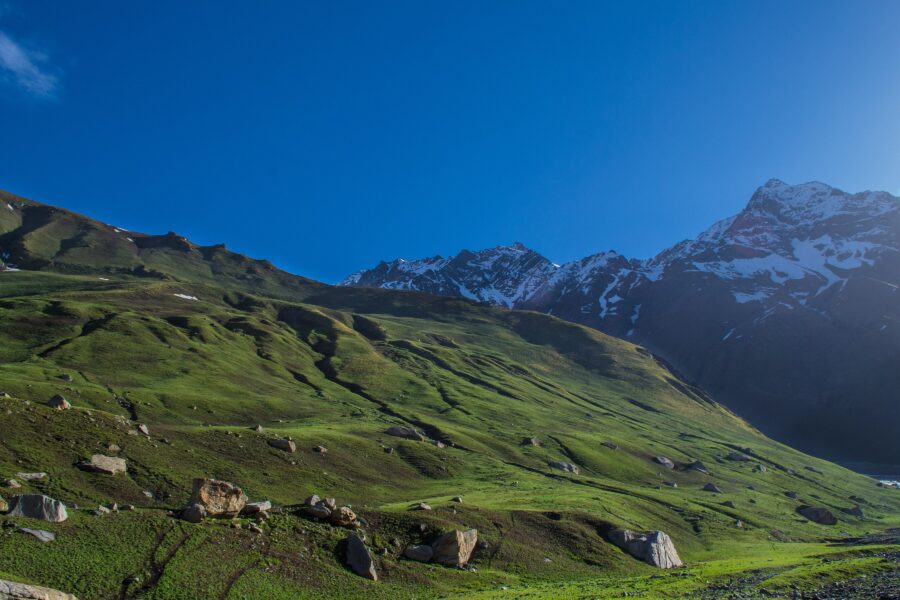
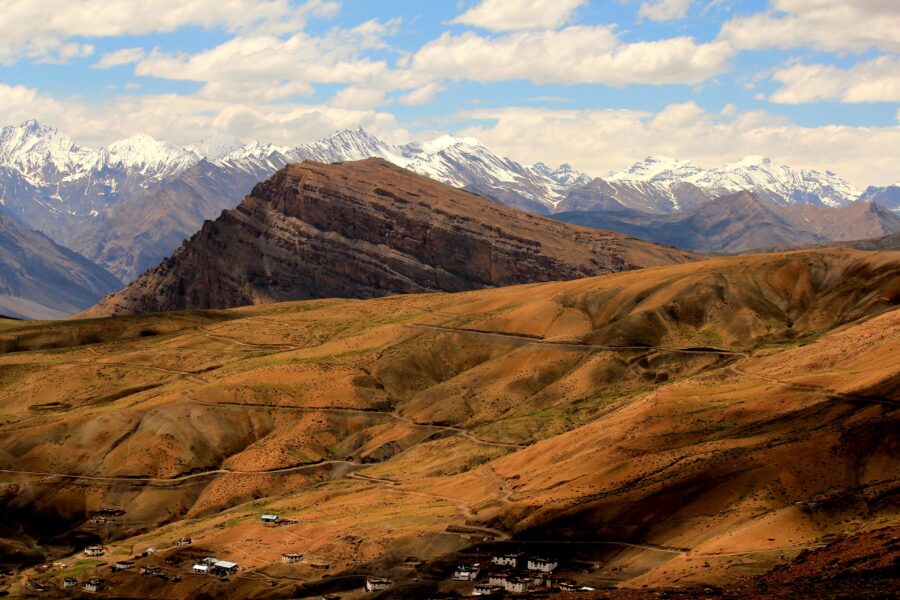
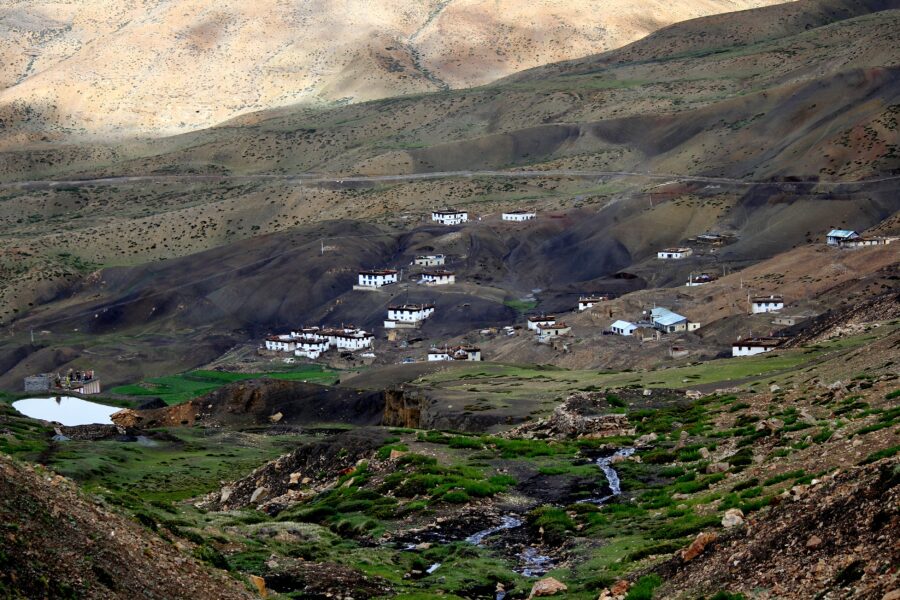
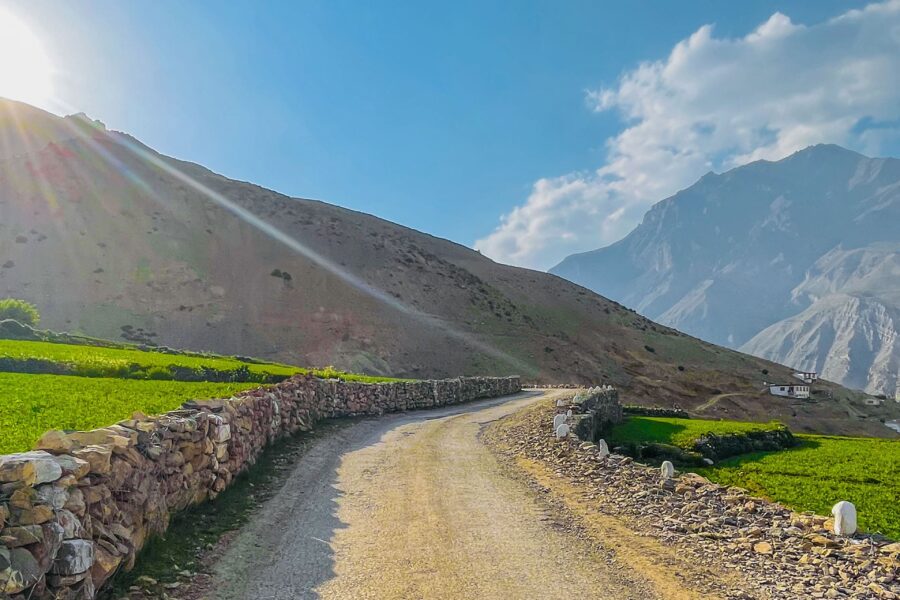
The village is a picture of green fields set against brown hills, with buildings built in the traditional Tibetan manner. The entire area is framed by snow-capped peaks, providing a breathtaking view of Langza. Villages in Spiti are separated into upper and lower portions, and Langza is no exception. The bottom section is known as Langza Yongma, and the top part is known as Langza Gongma. Langza Gongma is home to the Lang, the local village temple, and the hamlet’s most recognizable feature is a gigantic statue of Lord Buddha guarding the village. This statue is not only a local icon but also a popular internet image of Langza.
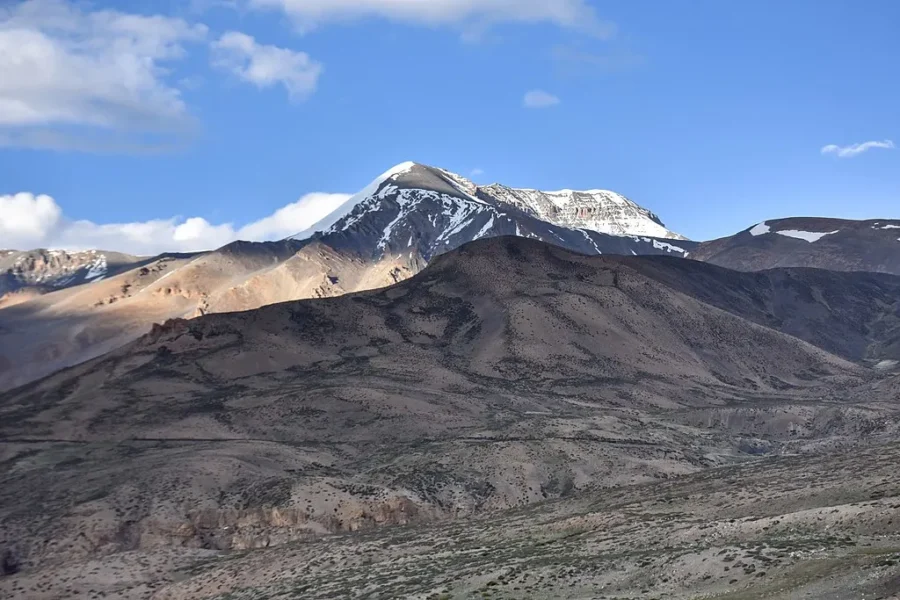
The beautiful Chau Chau Kang Nilda peak, which stands tall and proud, is another incredible feature of the area, contributing to its natural splendor. It’s a place where you may enjoy nature’s majesty and learn about the unique culture of this remote Himalayan community.
BEST TIME TO VISIT KOMIC VILLAGE
The best time of year to visit Langza Village depends mainly on your tastes and the activities you wish to participate in. Here are some tips for different seasons:
Summer (June to September) is the most popular season for visiting Langza. During these months, the weather is nice, with daily temperatures ranging from 15°C to 25°C. The snow has melted, and the village may now be reached by car. You can hike through the lovely green terrain, visit the Buddha monument, and explore the neighboring sites. Wildlife is very active during this season, making it ideal for birdwatching.
Autumn (October to November): The post-monsoon season provides beautiful skies and breathtaking scenery. The temperature begins to fall, but it remains comfortable for travel. As the crops mature, the environment turns golden, producing a one-of-a-kind aesthetic experience.
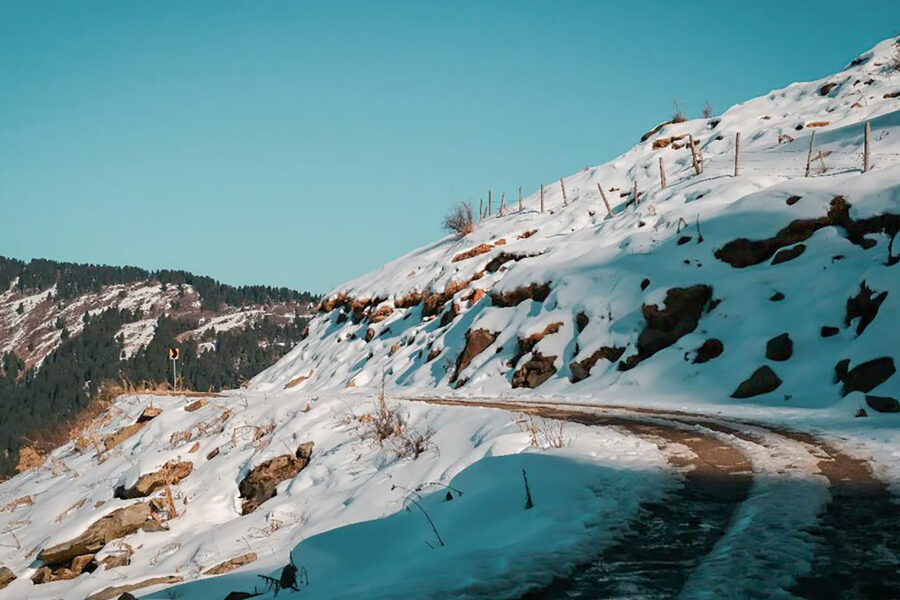
Winter (December to March): During these months, Langza is frequently cut off from the rest of the valley by severe snowfall. You can visit during this season if you want to witness a winter wonderland and don’t mind the harsh cold (temperatures can drop well below freezing). However, keep in mind that many facilities may be closed, and access may be restricted.
Spring (April to May) is another excellent time to explore Langza. The weather is pleasant, with temperatures gradually rising. As the snow melts, the landscape becomes more accessible. The fields begin to turn green, and this is an excellent time for photography and appreciating the local culture.
Finally, the best time of year to visit Langza Village is determined by your interests and tolerance for the weather. Summer and early fall (June to November) provide the most enjoyable and accessible experience for most travelers. Please keep in mind that weather conditions might vary, so check the current weather and road conditions before arranging your visit.
How to Reach Langza Village
To get to Langza Village, you’ll usually need to travel to the nearest large town, Kaza, and then to Langza from there. Here’s a step-by-step approach to getting to Langza Village:
Reach Kaza:
Kaza is the nearest important town to Langza. You may reach Kaza by vehicle, which will most likely include an amazing drive through the Spiti Valley.
Manali and Shimla are the closest main transportation hubs to Kaza. From either of these towns, you can get to Kaza.
By Air:
If you’re flying in from Delhi or another major Indian city, the closest airport is Kullu-Manali Airport (Bhuntar Airport). You can either take a taxi or a bus to Kaza from there.
You can also fly to Chandigarh or Shimla airports, but these are further away from Kaza.
By Road:
If you’re driving from Manali to Kaza, you can take a bus or hire a taxi for a more comfortable and flexible ride.
If you have your own vehicle, you can also drive to Kaza. Check that your vehicle is in good working order and is adequate for high terrain.
Kaza to Langza distance:
When you arrive in Kaza, you can take a local taxi or a shared cab to Langza Village.
The route from Kaza to Langza is around 16 kilometers long and offers breathtaking views of the Spiti Valley.
Things to do in Langza
Hunt the Geological Wonder: Langza’s Fossil Reserves.
Langza is well-known for its fossil-rich landscape. Visitors can take an amazing journey back in time by exploring the village’s fossil deposits. Here’s how you make the most of this once-in-a-lifetime opportunity:
Visit the Fossil Sites: There are various places in Langza where you can see fossils. A local guide can take you to these locations and explain the history of the fossils.
Fossil Identification: Learn to recognize fossils, especially ammonite fossils, which are common in the area. Understanding the many types of fossils enriches your experience.
Fossil Collection in a Responsible Manner: While it may be tempting to take home a piece of history, keep in mind that Langza’s fossils are valuable and protected. Collecting fossils without permission is prohibited.
Explore Ancient Monasteries
Langza is home to two old monasteries, Lang and Komic, which have both maintained their rich Buddhist tradition. The monasteries are decorated with exquisite paintings, thangkas, and statues, allowing visitors to immerse themselves in the region’s spiritual environment.
Getting to Know the Locals
Langza’s residents are noted for their warm welcome and traditional way of life. They maintain a pastoral lifestyle, subsisting on agriculture and animals. Interacting with the residents provides a once-in-a-lifetime opportunity to learn about the traditional customs and practices of this high-altitude town.
Learn the about Langza Yongma and Langza Gongma: Langza Village is separated into two sections: Langza Yongma and Langza Gongma. What you need to know about these divisions is as follows:
Langza Yongma: The village’s lower half is recognized for its lush flora and farming activity. You can walk across the terraced fields and talk to the friendly inhabitants.
Langza Gongma: The upper half of Langza Gongma holds the Lang Temple and the renowned Lord Buddha statue. Don’t miss out on seeing these historical sites.
Encounters with Wildlife
Langza Village is a haven for wildlife enthusiasts. The Spiti Valley is famous for its rich wildlife, which includes the rare snow leopard. Langza is one of the few sites in the world where you may go on a snow leopard safari. Other animals that live in this area include Himalayan ibex, blue sheep, and red fox.
Stargazing and camping
Exploring the countryside on walks or camping near farms provides an enjoyable break from the city. You may breathe in the crisp, pure air, connect with nature, and enjoy the simplicity of country living among the calm fields and rich scenery. The proximity to farms is ideal for relaxing walks through the fields or an outdoor camping experience.
Visit the Lord Buddha Statue and the Lang Temple.
Langza’s spiritual and visual highlights are the Lang Temple and the tall statue of Lord Buddha. Here’s how to appreciate them fully:
Lang Temple: Pay your respects to the Lang Temple and observe local religious practices. Remember to maintain the required etiquette in religious areas.
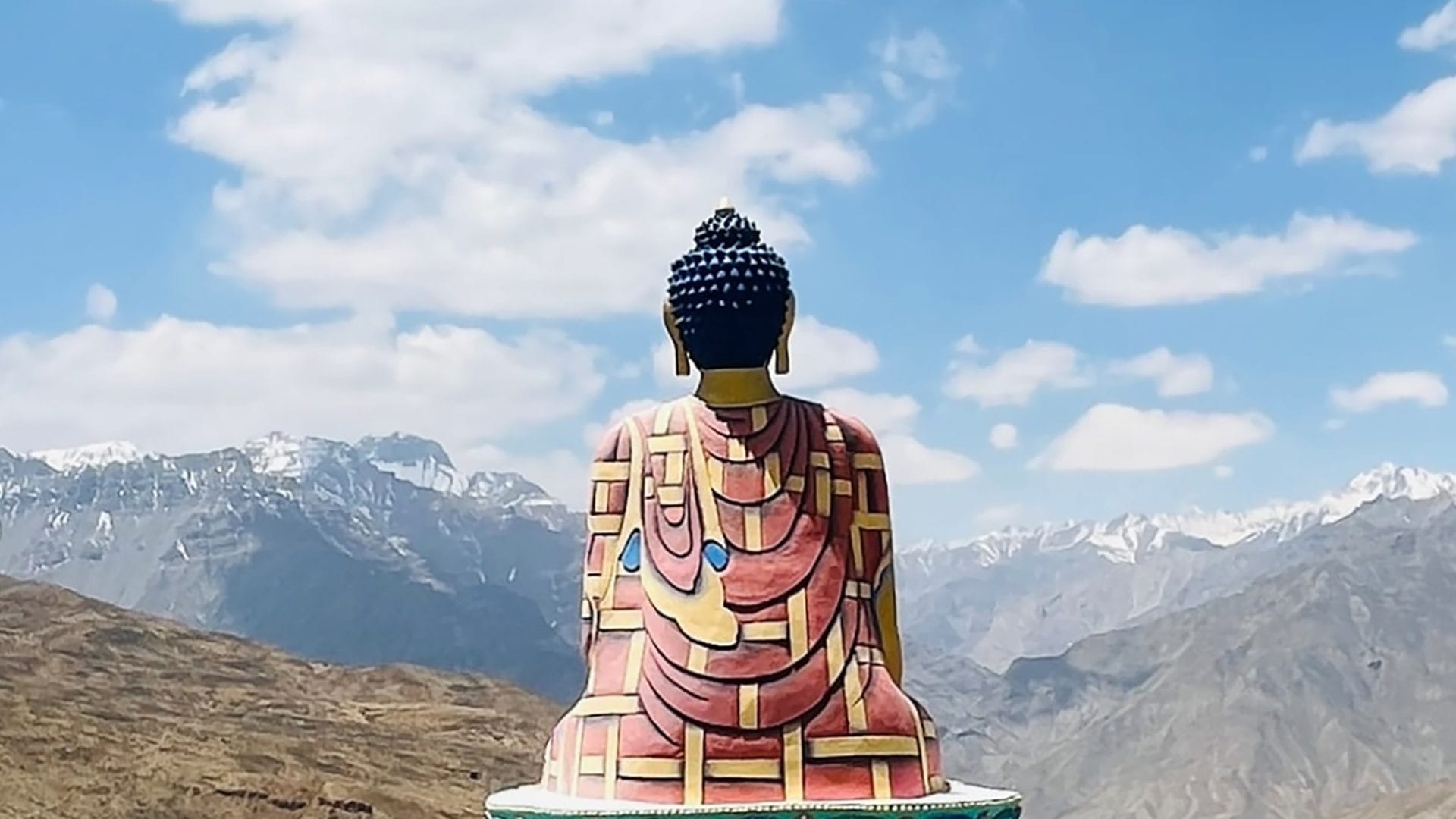
Lord Buddha Statue: One of Langza’s famous attractions is the ‘Buddha Statue.’ This huge statue, which measures 33 feet tall, is placed atop a hill overlooking the village. It has become a natural component of the local landscape and serves as a symbol of serenity and tranquility.
Langza’s Tibetan Architecture Tour
The architectural splendor of Langza is a monument to its Tibetan influences. Some villagers may let you into their homes, allowing you to have a close look at the architecture and learn about its history. The unusual residences in Langza are a photographer’s dream. Don’t forget to bring your camera to record the subtle details.
Explore Langza’s Crown: Majestic Chau Chau Kang Nilda Peak
The Chau Chau Kang Nilda summit gives a beautiful touch to the scenery of Langza. Trek to the base of Chau Chau Kang Nilda for an exciting adventure and unrivaled views of the Spiti Valley. The summit is a photographer’s dream. Capture the peak’s changing hues at sunrise and dusk.
History & Archaeological Importance
Langza is believed to be formed from the words ‘La’ (mountain pass) and ‘Za’ (from Zama). Another idea holds that Langza’s name is derived from ‘Lang’, the village temple.
Langza, like many other villages in the Spiti region, is rich in archaeological history. These places were submerged beneath the ancient Tethys Ocean about 200 million years ago, hiding an extensive range of Mesozoic aquatic animals. It’s mind-boggling to think that this land was once part of a massive ocean.
The Himalayan range and the Tibetan Plateau formed approximately 50 million years ago as a result of the collision of tectonic plates from the supercontinents Laurasia and Gondwana. The Tethys Ocean vanished as a result of this collision. Marine life fossils from the Tethys Sea can still be found in Langza and its surrounding settlements. In fact, if you took a spade and began excavating anyplace in the vicinity, you’d probably find a fossil or two in Langza today, much to your surprise.
Langza’s surprising and exhilarating experience of discovering marine fossils in the Himalayas is absolutely unique. However, it is equally important to acknowledge the archaeological significance of these fossils and act to preserve the Himalayan region’s unique geological legacy.
FAQ
Best Langza homestays to spend the night?
Homestays in Langza offer basic amenities as well as home-cooked meals. Many of these accommodations are solar-powered, assuring a constant supply of electricity. Typically, the hosts are happy to assist their guests with local excursions and treks. Here are some suggestions for homestays:
Tenzi Homestay Langza
Tenzi Homestay Langza has five bedrooms with nice mattresses and associated bathrooms (only two of the rooms have this characteristic). The per-night stay, which includes breakfast and dinner, costs INR 700 for rooms with connected bathtubs and INR 1000 for units without. The nightly charge, which includes breakfast and dinner, is INR 700 for rooms with attached bathtubs and INR 1000 for those with separate bathrooms. Reservations can be made by calling host Tenzi Spiti at +91-9459566627.
Langza’s Lara Homestay
Langza’s Lara Homestay combines traditional and modern aspects. It has five comfortable and clean rooms that are equipped with a local flair while still giving modern conveniences such as attached bathrooms, western toilets, room heaters, and hot water geysers. It is worth mentioning, however, that these luxuries come at a relatively greater cost. A one-night stay for two people, including two meals, costs Rs. 3500. To make a reservation, call host Lara Tsering at +91-9418537689.
What is the Langza Buddha statue’s history?
Langza, a scenic town in Himachal Pradesh’s Spiti Valley, is famous for its renowned Buddha statue. The Langza Buddha statue’s history is not as well documented as that of some other old artifacts, although it is thought to have been put relatively recently, in the early 2000s.
The statue portrays Lord Buddha and rises around 14,500 feet above sea level, making it one of the highest Buddha statues in the world. It’s made of clay and looks like a traditional Tibetan Buddha sculpture.
The specific motives for its placement are unknown, but it is a reflection of the region’s considerable Buddhist influence. The statue is both spiritual and physical. Its peaceful presence against the breathtaking Himalayan environment adds to the spiritual atmosphere of the village.
While the exact historical details and date of the statue’s installation are unknown, the Langza Buddha statue represents the deep-rooted Buddhist traditions and spirituality that have flourished in the Spiti Valley and remains an important cultural and religious landmark in the region.
What is Langza altitude?
Langza is located at an elevation of around 14,500 feet (4,400 meters) above sea level. This high elevation contributes to the area’s unique beauty and the beautiful vistas of the neighboring Himalayan ranges.
Langza is deep within a freezing desert. The weather becomes extreme. Landslides are widespread due to unstable terrain and environment. Except for businesses that depend on solar power, electricity is limited and inconsistent. Go prepared with a basic list of important Gear used in daily needs to the mountain or refer to our article on things to carry while traveling to the mountain.
Places to eat in Langza Village?
Here are some places to eat in Langza:
Homestays: Many visitors choose to stay in homestays, where hosts make traditional Spitian meals for their guests. This is a fantastic opportunity to learn about the local culture and cuisine.
Carry Your Own Food: Because restaurants and eateries are scarce, it’s a good idea to bring some snacks or non-perishable food items with you, especially if you have dietary preferences or limits.
Local Cafes: The village may have a few modest local cafes or tea stalls where you may get some basic food and beverages.
It’s crucial to remember that Langza is an isolated community with few food choices. To guarantee a comfortable and satisfying dining experience during your vacation, you should discuss your meal choices and dietary concerns with your homestay hosts ahead of time.
what type of temperature you can expect In Langza?
The Langza temperatures can vary significantly depending on the season:
Summer (May to September): Temperatures in Langza are milder throughout the summer months. Temperatures during the day can range from 10°C to 20°C (50°F to 68°F), making it a more pleasant time to visit.
Winter (October to April): The Langza winters are hard and exceedingly cold. Temperatures can fall as low as -15°C to -5°C (5°F to 23°F) during the day, and considerably lower at night. Snowfall is prevalent during this time, and the settlement is frequently blanketed in snow.
Langza, at above 14,000 altitudes, presents AMS issues to many trekkers. However, if you acclimate properly at lower altitudes on your way to Spiti via Kinnaur Valley, you are unlikely to have AMS at Langza. Still, the air is thin, and the height may be tiring. If you intend to go trekking in the area, be prepared for the unexpected.
What type of mobile connectivity is available in Langza?
Except for BSNL/MTNL, there are no mobile phone signals at Langza, which is dependent on the availability of electricity to power the mobile towers and weather conditions. Even BSNL signals get weak or disappear outside of Langza (on roads).
Are there any Hospitals and Petrol Pumps near Langza?
Because of its remote location in the high Himalayas, nearby amenities such as hospitals and petrol pumps are limited. Here are some things to be aware of:
Hospitals: The village of Langza does not have a hospital or medical institution. Medical aid is usually available in Kaza, the largest town in Spiti Valley, which is roughly 14 kilometers away. Kaza features a minor hospital as well as a few medical clinics. In the event of a medical emergency, it is best to seek treatment in Kaza.
Petrol Pumps: Langza does not have any petrol stations. The nearest petrol station is in Kaza, which is the region’s principal hub for fuel and supplies. Because fuel availability can be restricted in more rural regions like Langza, it’s critical to top up your vehicle’s tank in Kaza before traveling there.
IN CONCLUSION
Langza Village is a tribute to the Himalayas’ supernatural glory. It is an outstanding location because of its peaceful surroundings, old monasteries, and the thrill of discovering an elusive species. Langza is more than a location; it is an experience that leaves an unforgettable imprint on the hearts of those who visit.
So, if you’re looking for a calm vacation, a historical encounter, and the thrill of adventure, Langza Village should be on your bucket list.
If you enjoyed the post, please forward it to any family or friends who are considering a vacation to Langza or Spiti Valley. Best wishes for your travels!!!
Leave a Reply